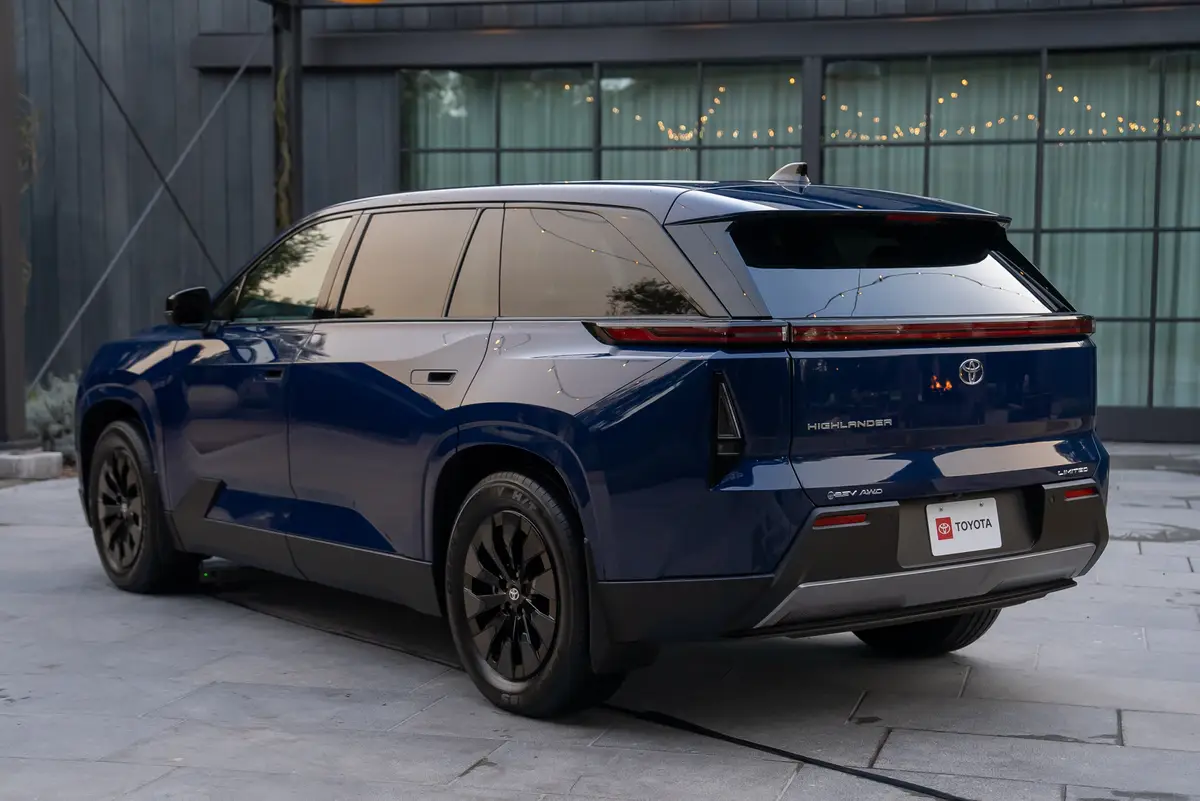
The Toyota Highlander is entering a new era. For 2027, Toyota is expected to transform its long-running three-row family SUV into a fully electric vehicle, marking one of the most significant shifts in the model’s history. Known for reliability, practicality, and family-friendly comfort, the Highlander is now poised to compete in the rapidly growing electric SUV segment.
The move reflects Toyota’s broader electrification strategy as global demand for EVs continues to accelerate.
A Bold Shift From Hybrid to Fully Electric
The Highlander has long been offered in gasoline and hybrid configurations. The 2027 version is expected to drop traditional combustion options in favor of a fully electric powertrain.
Industry reports suggest the new Highlander EV will likely ride on Toyota’s dedicated electric vehicle platform, designed to maximize battery efficiency and interior space. This change could allow for a flatter floor, improved cabin room, and better weight distribution compared to previous models.
Expected Range and Performance
While official specifications have yet to be confirmed, analysts expect the 2027 Highlander EV to target a competitive driving range of approximately 300 miles or more on a full charge. Dual-motor all-wheel-drive configurations are also anticipated, delivering strong acceleration while maintaining the smooth, quiet ride families expect.
Fast-charging capability will likely be a key focus, allowing drivers to recharge a significant portion of the battery in under 30 minutes at compatible charging stations.
Redesigned Exterior and Modern Interior
The all-electric Highlander is expected to receive a complete design overhaul. Expect sharper LED lighting, aerodynamic body lines, and a more futuristic front fascia that reflects its EV identity.
Inside, Toyota may introduce a larger infotainment display, enhanced driver-assistance features, and improved connectivity options. The three-row seating layout will remain central to the model’s appeal, offering flexibility for families and larger households.
Advanced Technology and Safety Features
Toyota is likely to equip the 2027 Highlander EV with the latest generation of its driver-assistance suite, including advanced adaptive cruise control, lane-keeping technology, and automated emergency braking.
Over-the-air software updates and expanded digital services could also play a major role, bringing the Highlander in line with other modern electric SUVs in the market.
Competition in the Electric SUV Segment
The 2027 Highlander EV will enter a competitive space that includes other three-row electric SUVs. Toyota’s advantage may lie in brand reputation, long-term reliability, and strong dealership networks across North America.
Pricing will be a crucial factor. If Toyota positions the Highlander EV competitively, it could become one of the most accessible three-row electric SUVs for mainstream buyers.
What This Means for Toyota’s Future
The shift to an all-electric Highlander signals Toyota’s commitment to expanding its EV portfolio. While the company has historically emphasized hybrid technology, the 2027 Highlander EV suggests a more aggressive move into fully electric territory.
For consumers, this reinvention represents a blend of familiar practicality with forward-looking innovation.
Final Thoughts
The 2027 Toyota Highlander EV represents a turning point for one of the brand’s most trusted SUVs. By combining three-row versatility with electric performance and modern technology, Toyota is preparing the Highlander for the next generation of drivers.
As official details emerge closer to launch, the Highlander EV could quickly become one of the most anticipated family SUVs in the electric vehicle market.